


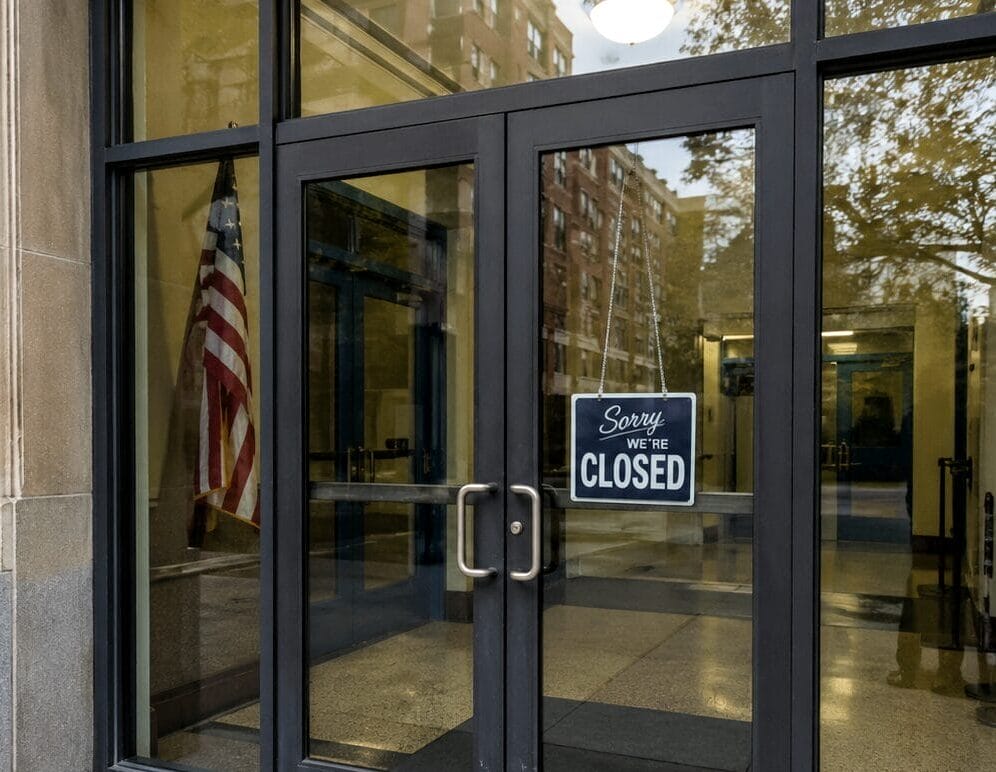
Wisconsin’s largest school district, amid a fiscal crisis, should close 25 underutilized school buildings to free up wasted resources, says a Milwaukee-based education advocacy group — even as the Milwaukee Public Schools has discussed, then put off, talk of closing just five buildings.

The issue is “worse because we’ve punted this can down the road,” said Colleston Morgan, executive director of the advocacy group, City Forward Collective, to the Badger Institute. “It’s going to require some boldness and some political courage frankly at a scale that we have not seen from this district up until this point in time.”
“This is a governing structure for the school system which has been unwilling to deal in reality for a very long time,” he said.
After a 2024 financial reporting scandal that cost the district’s superintendent his job, current superintendent Brenda Cassellius, hired in early 2025, has faced crises involving the district’s finances and old lead paint in its buildings. Auditors concluded this winter that the district overspent its budget by $46 million last school year, a deficit that’s forcing spending cuts. Cassellius won the board’s approval to lay off some staff at the end of this school year, but the district now is bickering with its union about the layoffs and the timing of pay raises.
Meanwhile, a consultant recommended the district close five school buildings amid a long decline in enrollment, but Cassellius said she won’t recommend any closures for next fall, and both the school board and unions have balked.
The failure to right-size the district’s roster of schools, said a City Forward Collective policy brief, compounds the crisis, “draining resources that should go to classrooms.”
The brief, published in February, highlighted how MPS’ schools continue to be among the lowest rated in the state, representing a danger to the state’s Black students, 57 percent of whom attend an MPS school. Of about 55,000 students attending a school on Milwaukee’s north side, only 18 percent attend what City Forward classifies as a high-performing school. Among high schoolers, it’s 14 percent, and none of the high-performing schools are in MPS.
Enrollment at MPS schools, which was around 78,000 students in 2008, has since slumped to about 55,000 in 2025. The decline is leading MPS to spend more money on fewer students: “Every dollar spent maintaining underutilized infrastructure is a dollar not invested in academic programs, teacher development, or student support service,” the report said.
Morgan repeated the brief’s finding that the district is running at least 25 more buildings than it needs.
“You’re talking about buildings in some cases built for 300, 400, 500 students, where maybe there are less than 100 kids in a building on a given day,” Morgan said.
The district’s own consultant said last year that closing five schools could save about $14 million in facility costs over 10 years plus annual operating expenses of $3.4 million to $4.3 million.
“That’s not including the second order savings that you would get from a right-sizing on the staffing side to go along with a reduction in the district’s footprint,” said Morgan.
“Closing schools is always a challenge and it causes issues for families,” said Robb Rauh, a senior adviser at City Forward and a former CEO of high-performing charter schools in Milwaukee. “It’s never an easy decision to make, but the ultimate goal would be to provide the best educational opportunities for children.”
Morgan faulted MPS’ leaders for failing to come to terms with declining enrollment, which stems from both a steep drop in births in Milwaukee and from about half the school-attending children in Milwaukee flocking to other options, such as charter schools, private schools and other districts via open enrollment.
“This is a two-decades-long trend,” Morgan said. “It’s not just in Milwaukee; it’s been happening in a lot of cities around the country. We have just stuck our heads in the sand and refused to address the academic consequences of that and refused to address the necessary facilities consequences.”
Morgan said, however, that he is hopeful.
“I think we are at least getting honesty from the superintendent for the first time in a while,” he said. “We’ve heard the superintendent speak forthrightly about unacceptable academic outcomes, we’ve heard the superintendent speak forthrightly about the district needing to get its fiscal house in order.”
“Talk is cheap, however, if it doesn’t get followed by action,” Morgan added.
City Forward isn’t the first to call out the district for its half-empty buildings. Retired MPS Superintendent Bill Andrekopoulos called out the district in 2024 for failing to close unneeded buildings.
That was in the run-up to the district’s referendum request for $252 million extra in revenue per year over the taxpayer-protecting revenue limits in state law. At that time, the Badger Institute reported at least 39 MPS schools had enrollments equaling less than two-thirds of their buildings’ capacity, and at least 28 schools had been under two-thirds full for three years running. Voters narrowly approved the referendum.
In a statement to the Badger Institute, the district insisted it was acting.
“We absolutely recognize where our educational challenges are the greatest and are committed to addressing them,” the statement reads. “Perhaps most important, we have been forthright about the fact that 90 percent of our fourth grade students were not reading on grade level based on the sample of students that took the National Assessment of Educational Progress (NAEP). We are implementing a new literacy plan that includes new science of reading-aligned curriculum that arrived in classrooms in January.”
“We are making real changes that will positively affect what takes place in our classrooms,” the statement reads. “We’re investing in lower class sizes, more teachers and the best curriculum, tools and techniques to help all students learn to read.”
Jackson Walker is a native Wisconsinite and a Michigan-based journalist.
Any use or reproduction of Badger Institute articles or photographs requires prior written permission. To request permission to post articles on a website or print copies for distribution, contact Badger Institute Marketing Director Matt Erdman at matt@badgerinstitute.org.
Submit a comment
Go to the full page to view and submit the form.