



By the numbers
Wisconsin’s state spending to help school districts pay for special education has been surging in recent years. Under the tax-and-schools deal between Gov. Tony Evers and legislative leaders, rejected in the Senate Wednesday, those appropriations would rise even further.
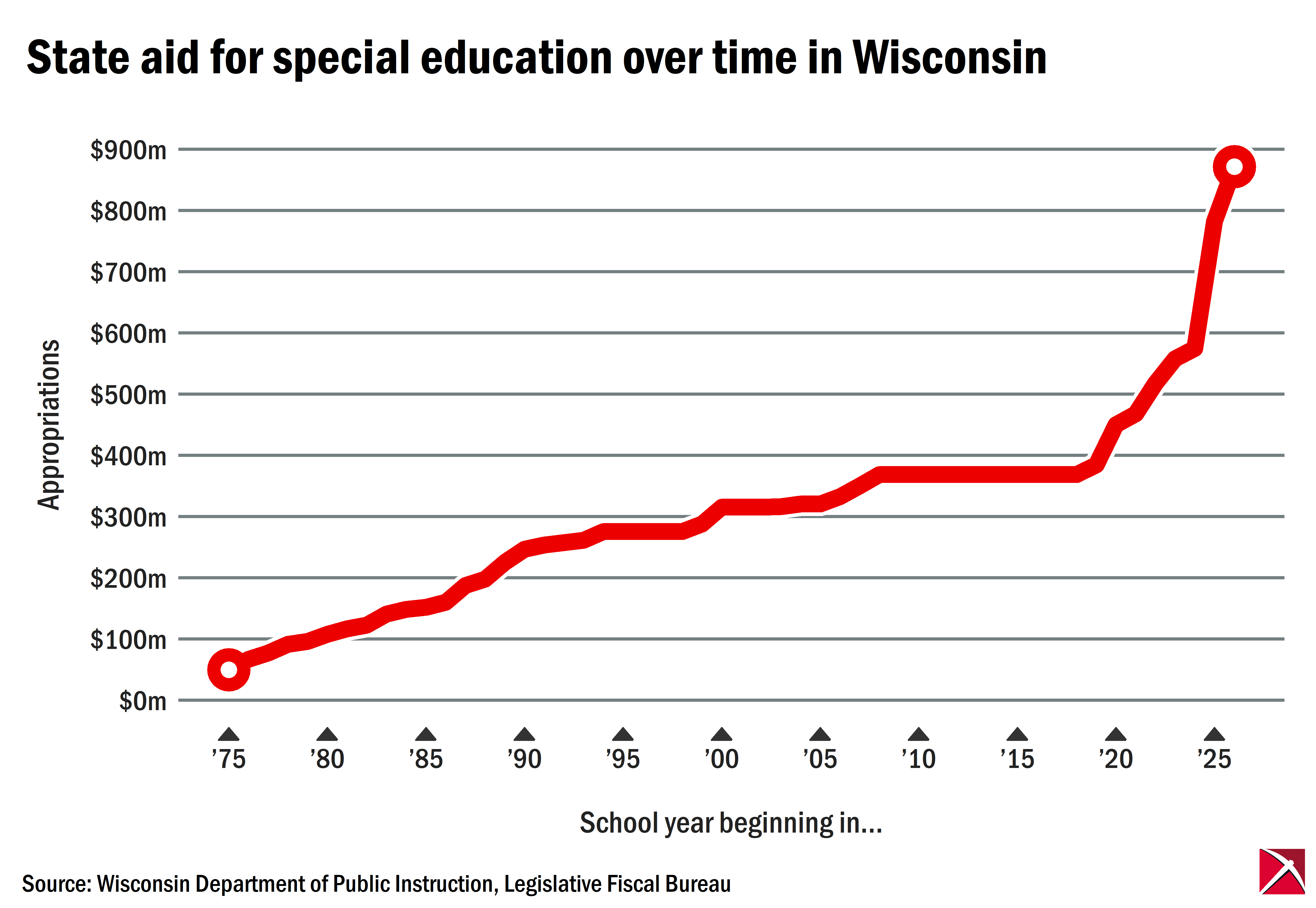
From 1975 to the mid-1990s, Wisconsin’s state appropriations to help districts cover special education costs were characterized by a gradual increase, with one period, 1995 to 2019, when increases slowed, with several periods when spending was held virtually constant.
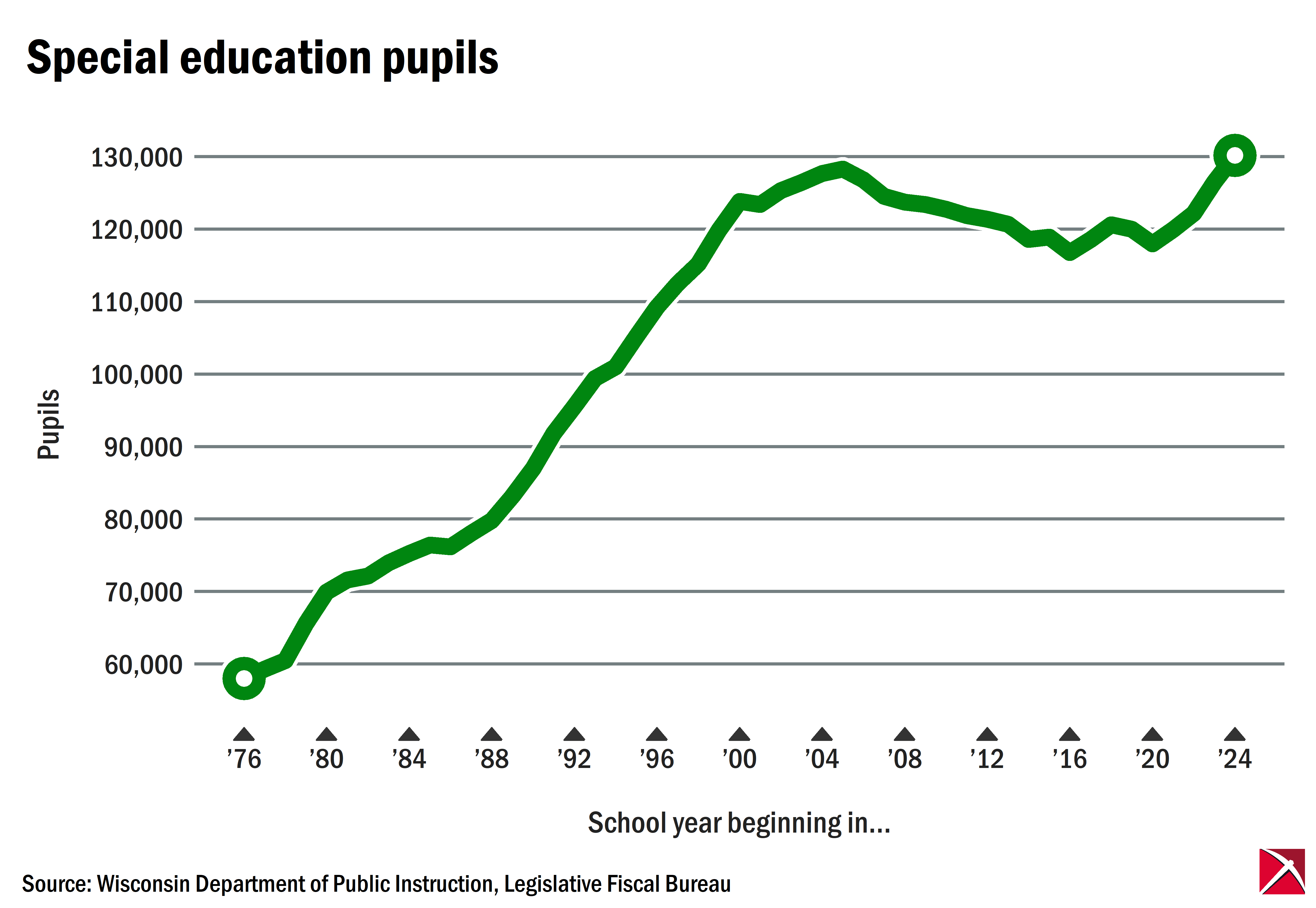
Over the same time, the number of pupils served by the special education program increased dramatically, from 58,021 in 1976-77 to 128,290 in 2005-06, a 121 percent increase, before receding to 120,602 in 2018-19. The state defines such students as those who are disabled because of cognitive disabilities, hearing impairments, speech or language impairments, visual impairments, emotional disturbance, orthopedic impairments, autism, traumatic brain injury, learning disabilities, or significant developmental delay.
In the 2019-20 school year, funding began to increase sharply, jumping to $450 million in the 2020-21 school year even as student enrollment decreased to 117,969. Appropriations then increased again to $518 million in 2022-23. The increases over the current and next school years are even more dramatic: The state’s current budget appropriated $782.4 million in the school year and $871.8 million in 2026-27, a 51.6 percent increase over the 2024-25 level.
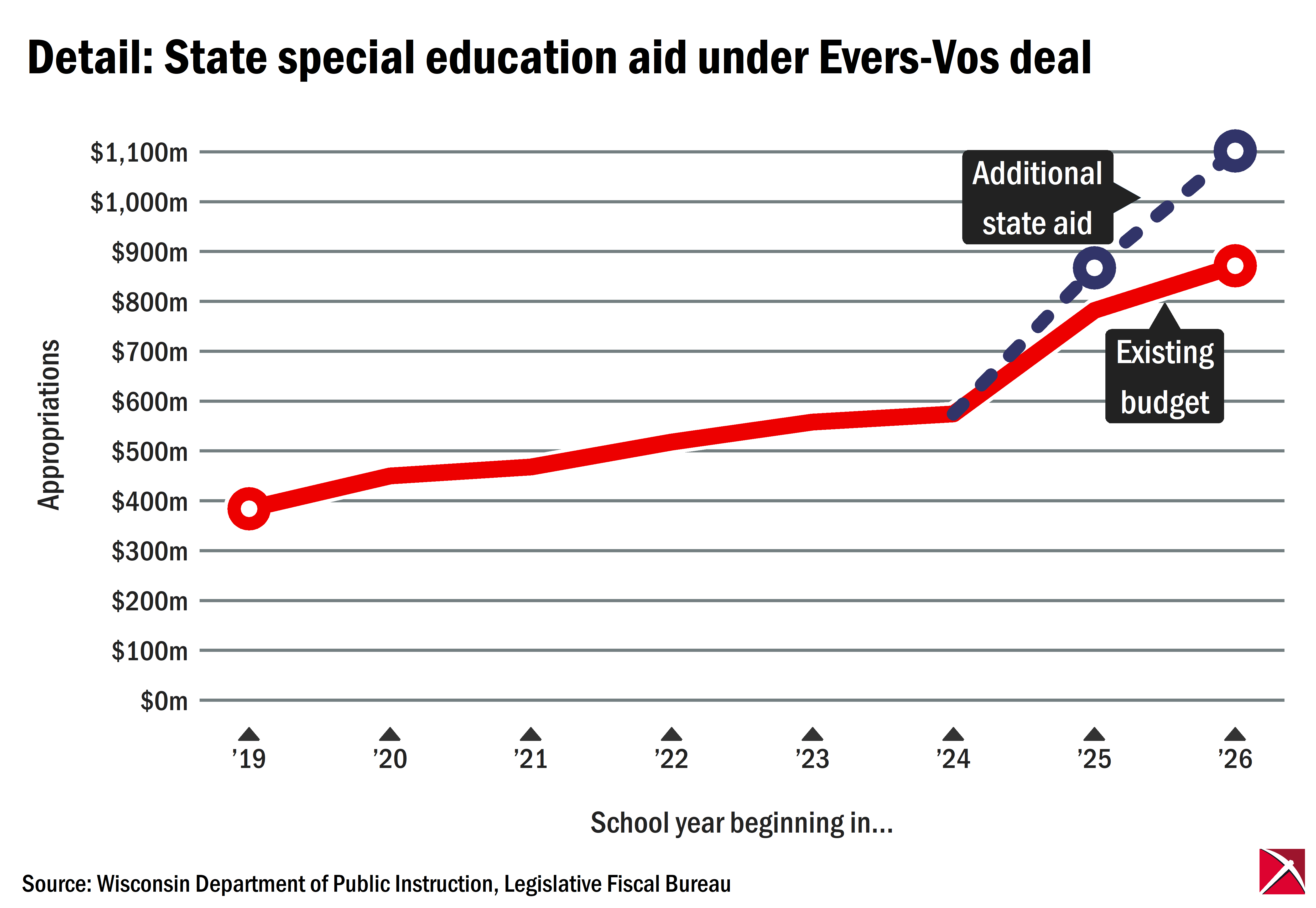
Under the deal negotiated by Evers and GOP leaders in the Legislature, appropriations in 2025-26 would have increased by 10.9 percent to $867 million, while funding in 2026-27 would have increased by 26.4 percent to $1.1 billion.
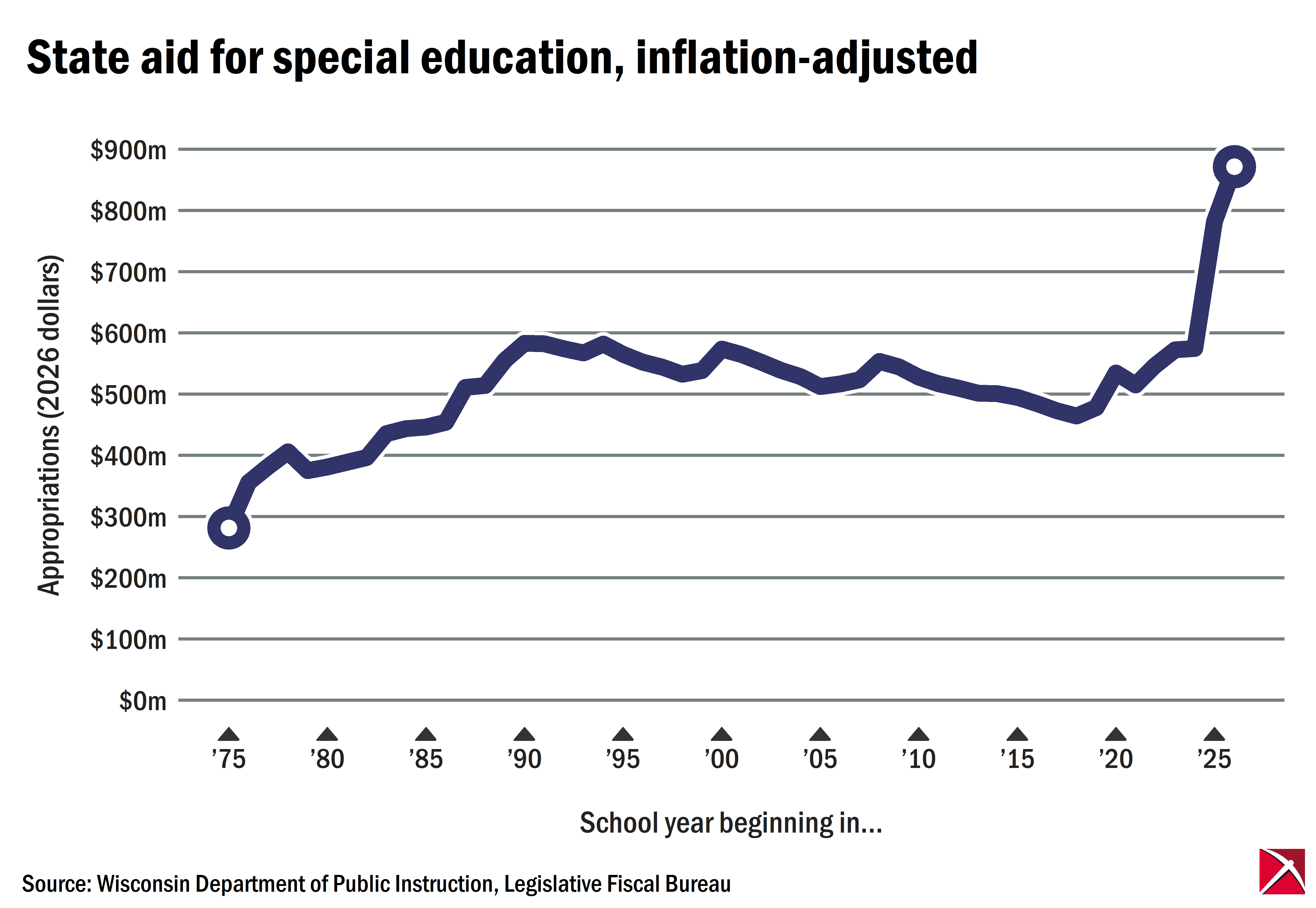
These appropriations dwarf past funding levels even after accounting for inflation. In today’s dollars, Wisconsin special education funding in 1975-76 was equivalent to $281 million and reached as high as $583 million in 1990-91. Funding then decreased in inflation-adjusted terms over the next few decades, reaching a low of $465 million in 2018-19.
Wyatt Eichholz is a policy and legislative associate at the Badger Institute.
Any use or reproduction of Badger Institute articles or photographs requires prior written permission. To request permission to post articles on a website or print copies for distribution, contact Badger Institute Marketing Director Matt Erdman at matt@badgerinstitute.org.

