



Time can be better spent on other things like AI
Here’s a question I hope somebody asks anyone who applies to be the next chancellor of the University of Wisconsin-Madison: Why in the world in 2026 should we continue to have an ethnic studies requirement for all undergrads?
Here’s another one: Do you even know what it is and what it entails?
I’ll help with the second one first.
Almost 40 years ago in 1987, the Phi Gamma Delta fraternity, known as the “Fijis,” put up a large caricature of an “island native” as part of their “Fiji Island” theme party, according to a 2002 College of Letters & Sciences report. The Black Student Union called it racist and demanded that the university take action.
The following year, the Letters & Sciences Faculty Senate adopted a three-credit ethnic studies requirement for all students entering the college, and that eventually morphed into what the university has today. All undergraduate students have to take one of the three-credit ethnic studies courses.
There is a ton of them.
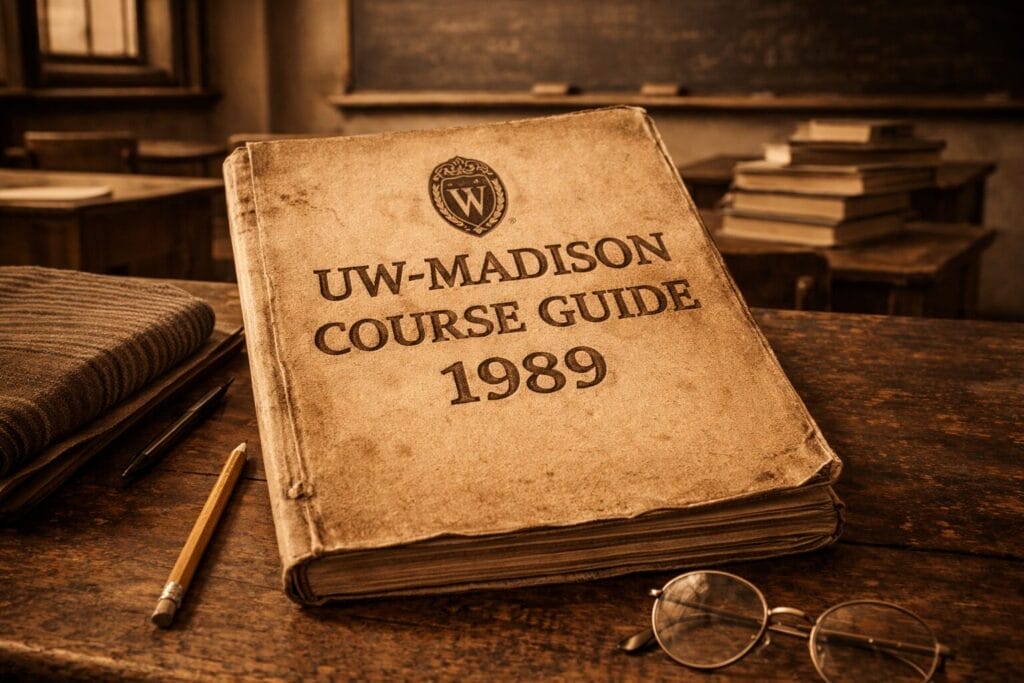
Ethnic studies is an enormous part of what is offered at UW-Madison. In 1989, there were 95 courses approved as part of the initiative, 60 of which were expected to be offered the following year. By June 2001, 189 courses fulfilling the ethnic studies requirement had been approved, 124 of which were taught between the fall of 1998 and the spring of 2001.
How many are there now? My email to a UW spokeswoman went unanswered by the time we published.
But the current course catalogue is thousands of pages long, and you could spend days reading through it. I spent only hours and found these examples of courses that are offered, though not necessarily every semester, to fulfill the ethnic studies requirement.
- Black Music and American Cultural History: “Examines the interaction between African American musical culture and its historical context, with an emphasis on the period from 1920 to the present.”
- Introduction to Black women writers: “Fiction, autobiography, non-fiction prose, and poetry” of 19th and 20th century “Afro-American” women will be read and discussed.
- Race and American politics from the New Deal to the new right: “Survey of the decisive role played by race in American politics, 1932 to present,” with a “focus on origins and accomplishments of ‘the Second Reconstruction’; Black Power and white backlash; contemporary racial politics.”
- Eating Asian America: Examines “diverse food cultures” as an “entryway to questions about Asian American politics, identities, and histories. Considers Asian American food consumption, labor, and discourses in relation to challenging racism and fighting for belonging in the U.S.”
- Asian America Feminist & Queer cultural productions: How “Asian American feminist and queer critiques can bring to light the ways that structures of domination uphold and further perpetuate Asian American marginalization.” Covers “racialized, gendered and sexualized images and stereotypes.”
- Race and language in STEM and environmental education: “Exploresthe contestation of ongoing histories of injustice, exclusion, and raciolinguistic hierarchies across science, mathematics, and environmental education. Scholarship from Chicane/Latine Studies, raciolinguistic perspectives, and post/de/anticolonial studies will be examined to critically analyze these school subjects and related hierarchies of knowing, languaging and being.” Covers how “students, educators and community activists” have “worked to repurpose science, mathematics and environmental pedagogies toward aims of linguistic, racial, educational and environmental justice.”
- Education and White supremacy: An overview of “the construction of racialized identity in the U.S.” Connects “race, ethnicity, and white supremacy” to “historical and current models of schooling. Explores the concept of settler colonialism and introduces its history in the U.S. and in Wisconsin. Fosters understanding of white supremacy and of formal schooling as national systems that often work to reinforce one another.”
- History of student activism from the Popular Front to Black Lives Matter: History course “with an emphasis on the experiences racial/ethnic minority youths who have been marginalized or discriminated against. … What do their histories reveal about the capacity and mechanisms for achieving racial equity?”
- Outdoors for all: inequities in environmentalism: National parks and wilderness “are disproportionately underutilized by African Americans, Hispanics, Asians and Native Americans for reasons that are inextricably linked to past and present racial discrimination.”
- Introduction to Lesbian, Gay, Bisexual, Transgender and Queer+ studies: Covers “theories of identity formation, different societal interaction with LGBTQ+ communities, LGBTQ+ cultures in history, and contemporary legal and political issues.” Students will “explore the intersections between LGBTQ+ identities and other socially marginalized identities.”
- Carmen Miranda: “Examines the work, representation and interpretation of Carmen Miranda from her early days as a radio star in Brazil to a film actress and entertainer in Hollywood in the 1940s and 50s.”
- Yiddish song and the Jewish experience: “ExploresYiddish song as an expression of the modern Jewish experience from Eastern Europe to the U.S. Covers folk song, popular and art music. Music and readings together provide an analytical framework to examine cultural and historical issues.”
- The long Black freedom struggle from the Civil War to the present: “Forged in a history of enslavement and in many ways ongoing, this freedom struggle encompasses the history of abolitionism to the struggle for civil rights to the fight for Black Power to the effort to make Black Lives Matter.”
- Code and power: “Prepares students to analyze and critique the portrayal of race, gender and computing in various media outlets and to consider their own potential as contributors to the computing industries. … As students confront assumptions about gender race and computing, this course will also equip them with the skills necessary to confidently design, develop and discuss web scripting aspects related to PHP website development.”
- Culturally responsive science communication: “Analyzes inequities in science communication and explores approaches to increase equity and cultural competence in an evolving social landscape.”
- Honors seminar on race and politics in the United States: “Examines the sources and policy implications of racial division in American politics” by analyzing issues such as affirmative action, black majority congressional districts, differences in public opinion between whites and blacks, and ethnic tensions, “with a focus on trying to find common-ground solutions.”
- Race, intersectionality, and equity in education: Aims to help “teachers more thoughtfully and equitably serve their students of color and develop a critical and historical understanding of the racism, marginalization, and exclusion that is endemic to the U.S. public school system.”
There are dozens, probably scores, of other classes that fulfill the requirement “intended to increase understanding of the culture and contributions of persistently marginalized racial or ethnic groups” and “equip students to respond constructively to issues connected with our pluralistic society and global community.” according to UW-Madison’s Undergraduate Guide.
I’ve included what I think is a fair sample of classes that range from interesting to perplexing to divisive and harmful to just plain odd.
It’s hard to know if the actual courses comport with the descriptions. But count me among those who would be interested in learning more — should I choose — about Carmen Miranda and some Black writers and Yiddish music. The slacker and aspiring foodie in me would be up for eating some Asian cuisine as well and even getting credit for it if not for that segue in the course description about somehow “challenging racism.”
There’s a troubling, apparent mindset in many of these courses that racism not only exists but infuses every aspect and opportunity in every corner of and communication in America, from what we eat to where we hike.
Do we really need to force kids who just want to code or are interested in STEM or the sciences or just in taking a stroll that they need to see everything through the lens of race or power or inequity? How about teaching instead that individuals have true agency and opportunity?
Or at least stick to objective facts.
Instead, there’s a strong insinuation even in the course descriptions of forming activists and spreading the perspective of racism and marginalization and exclusion into other classrooms where at least some of these students will themselves end up teaching.
Ethnic studies requirements are infused with a leftist slant, to say the least — an idea of a country with structures of domination and marginalization and injustice and exclusion and white supremacy and group identity. If you’re convinced that is the America in which we live, there are many ways and places you can make your views heard other than the classroom where the kids who just want a job and a way up are a captive audience.
UW System President Jay Rothman, to his credit, wants the system and all students to move into the future with, for example, an awareness of artificial intelligence.
“I think it’s important that we don’t get hung up and say, ‘If you don’t have an AI degree, then you’re not focused on AI,’” Rothman was quoted as saying. “I think the challenge now is, how do we ensure that our students are AI literate across the board, regardless of what a particular field of study that they’re in?”
That’s a great question that goes hand in hand with another I’ve asked.
Why in the world in 2026 should we continue to have an ethnic studies requirement for all undergrads?
We shouldn’t.
Especially when the system appears to be looking for some open time slots to give students what they really need to prosper in an ever-changing world.
Mike Nichols is the President of the Badger Institute.
Any use or reproduction of Badger Institute articles or photographs requires prior written permission. To request permission to post articles on a website or print copies for distribution, contact Badger Institute President Mike Nichols at mike@badgerinstitute.org.

