



Money wasted on Hop while bus access for people who really need it is at risk
Milwaukee County’s bus network has swerved back from the fiscal brink, one tire halfway over the void as officials shuffle money, trim back some routes’ hours and wonder what they’ll do next year.
Pay attention, Wisconsin taxpayers: You’re financing a lot of this, so there’s a big question you’ll want to ask. Hint: It involves the City of Milwaukee’s downtown toy that runs on overhead wires, rails in the street and egregious sums of money.
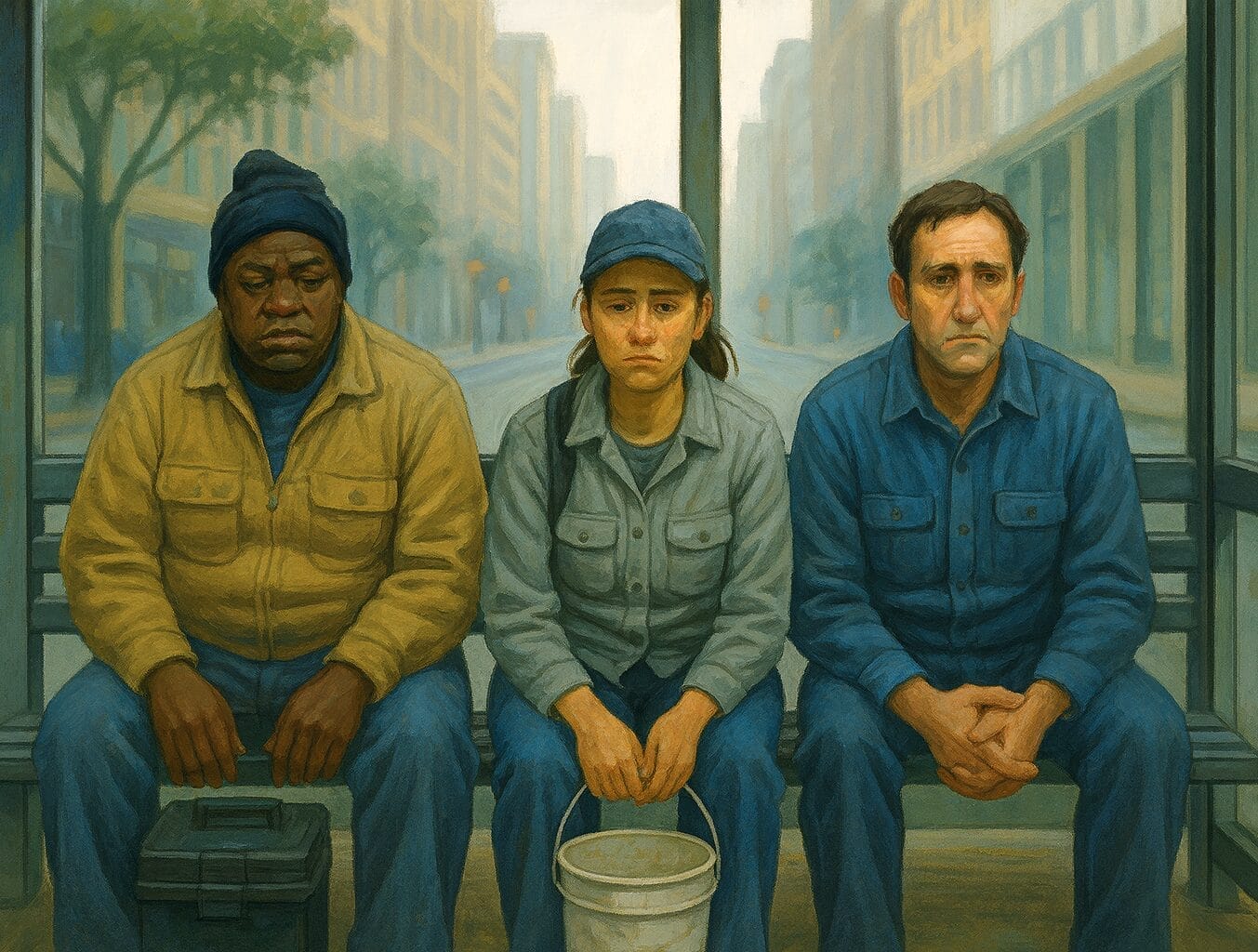
The crisis at Milwaukee County Transit System leads to real turmoil for people who don’t need more of it. After officials in October, surprised by a deficit of more than $9 million, proposed eliminating six routes, journalists had no trouble finding truly moving stories.
There was the Wauwatosa man who’s legally blind from a genetic disorder and uses the bus to get to work. The high schoolers who rely on a bus to get to one of Milwaukee Public Schools’ few bright spots. The guy in his 60s scrimping while he gets a tech-college degree.
“It causes so many problems,” said the Tosa man who, his vision being too poor for a driver’s license, picked his family’s house to be near a long-established bus line.
For now, the county patched it over, scraping up $4.7 million — keep that figure in mind — and running less frequent buses. Whew, but since state taxpayers provided about 4 in 10 of the system’s operating dollars, $73 million per the latest filing with the Federal Transit Administration, and since county officials complain that state aid is inadequate, this will stay on your radar even if you live far from Milwaukee’s shenanigans.
Those shenanigans have been multifaceted. Not only was Milwaukee County somehow surprised that its transit system was coming up $10 million short in the current year, but transit officials kept the shock to themselves, failing for months to tell the county board. Officials blame it on “unexpected overtime,” among other costs, but it doesn’t help that they’re using one-time federal pandemic money to fill ongoing budget holes as ridership is still below pre-pandemic levels.
Nor does it help that about a third of riders this year have evaded paying their fares.
But if Wisconsin taxpayers, seeing where this is headed, grant that it’s important to run buses in a city where markedly more of the residents can’t drive, they can also ask that Milwaukee, as a community, take the matter seriously.
For starters, if public transportation is so fiscally squeezed, taxpayers can ask why any of Milwaukee’s capacity to fund it is being whizzed away on something that isn’t transportation so much as urban décor.
Remember that $4.7 million shuffled to spare bus routes? It’s just about equal to the $4.2 million the City of Milwaukee ginned up to cover the operating deficit of its five-car downtown trolley system, “The Hop.”
Different systems, the trolley’s defenders will rush to say, different pots of money. Wisconsin taxpayers will rightly give a dismissive wave to this org-chart nicety, noting that Benjamins all look alike. More relevant is that, for every portrait of Mr. Franklin, Milwaukee gets a lot more bang out of buses than streetcars.
Those 2024 federal filings by both city and county tell us that operating expenses for the Milwaukee County Transit System’s buses in 2024 came to $5.86 per “unlinked passenger trip” — that is, per ride. Fare, for the two-thirds who paid it, was $2, and in total covered 15 percent of the costs.
Milwaukee’s streetcar? Federal figures say that operating expenses were $19.13 a ride. Fares covered absolutely none of it, since the city’s never tried collecting them.
Oh, but trolleys serve a different purpose, defenders say.
Indeed: When Milwaukee Ald. Scott Spiker recently urged the city to dump the money-sucking thing, other aldermen justified it in more airy terms.
“It’s a strategic investment,” said one, that “raises property values downtown” — a claim long since debunked. Another burbled, “It’s about vision. It’s also about hope.”
That is, the Hop isn’t so much transportation as it is a mystical agent of broadly reshaping Milwaukeeans’ travel habits. Put plainly, the claim is that buses won’t get high-income people to give up cars and move downtown the way rails will because buses aren’t as cool.
OK, but the streetcars that, as Spiker put it, are largely “a device for transporting the unhoused and the well-heeled,” cost $399 an hour to operate, per federal figures. A bus for the strivers getting to work or school? Only $114 an hour.
Where is the justice in a government offering a $399-per-hour ride to well-off passengers with other options — and charging them nothing for it — while the much more efficient wheels for those who really need a ride are caught in a budget crisis?
The big question Wisconsin taxpayers should ask is this:
If Milwaukee is going to ask them to send more money for transit, if city and county will ask their own residents for still higher sales taxes or wheel taxes, and this amid embarrassments about surprise deficits and evaded fares, shouldn’t taxpayers demand, before reaching into their limited-capacity pockets, for some assurance that the community isn’t wasting what transit resources it has on $19.13 free rides that were somehow about vision and hope instead of efficiently getting regular people to work?
Patrick McIlheran is the Director of Policy at the Badger Institute.
Any use or reproduction of Badger Institute articles or photographs requires prior written permission. To request permission to post articles on a website or print copies for distribution, contact Badger Institute Marketing Director Matt Erdman at matt@badgerinstitute.org.

